

✦ Crystal Courtesan · spectrum catalog
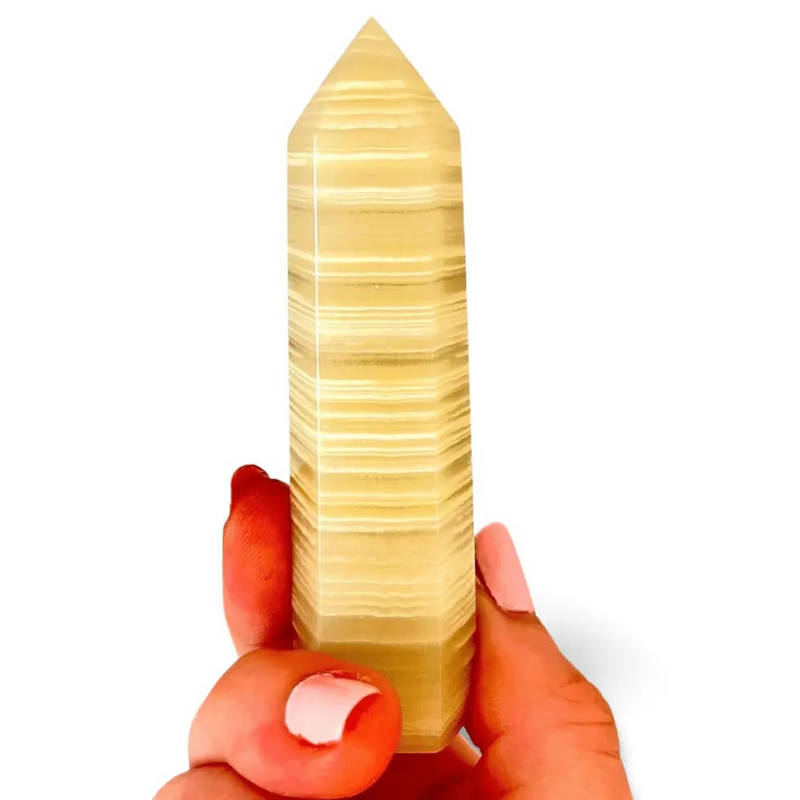
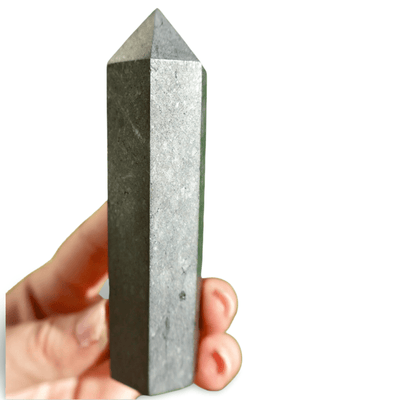
Jade Stone Tower - Lime Green Natural Decor for Balance, 3-4 Inches
Jade
Museum grade claritySpecimen tier
FireEarthAirWater
Mohs 7
Chakra Heart
Element Earth + Water
Zodiac Taurus
Formula NaAlSi₂O₆ / Ca₂(Mg,Fe)₅Si₈O₂₂(OH)₂
Color
Planet Venus
$17.00$19.99
🌍 Ethically Sourced
🔬 Authenticity Verified
📦 Carefully Packed
✨ Natural Inclusions
"Luck, wellbeing, spiritual balance, long life"
✦ Crystal Courtesan · spectrum index
Jade
Luck, wellbeing, spiritual balance, long life
Read the full mineral deep dive →Spectrum match
Tap your sign or birth month — we'll map Jade against your geometry.
HeartTaurus🪐 Venus🔢 11
☽↑
Wax · Accumulate
Tough nephrite/jadeite fiber structure
☽↓
Wane · Release
Kidneys, emotional harmony, stress reduction
Embrace the serene power of Jade to cultivate harmony and balance in your daily life. This ancient stone is your ally for attracting prosperity and fostering genuine connections. Let its calming energy melt away stress, empowering you to navigate challenges with grace and confidence. You deserve the emotional healing and self-sufficiency that Jade offers, bringing a grounded sense of peace to your modern world.
Dual spectrum
Physical geology × metaphysical field — full mineral readout.
Physical · Earth science
History
Modern Uses
Quick Facts
NaAlSi₂O₆ / Ca₂(Mg,Fe)₅Si₈O₂₂(OH)₂Mohs 7Earth + Water🌍 China, Myanmar (ethical)
Explore by keyword
Preservation protocol
Cleanse, recharge, place — museum-grade care for prism specimens.
🧼
Cleanse
Bathe with mild soap
🌙
Recharge
Charge in moonlight or sunlight as appropriate for this crystal.
⚠
Safety
Jade is generally safe to handle and wear. Authentic nephrite and jadeite jade are non-toxic and suitable for direct skin contact, including gua sha tools and jewelry. However, be aware of the following:
Dyed or treated jade: Some lower-quality jade is chemically treated or dyed (often called "Type B" or "Type C" jade). These treatments may involve resins or polymers that can degrade over time or cause skin sensitivity in rare cases. Always source from reputable suppliers.
Imitations: "Jade" sold at very low prices may actually be serpentine, aventurine, or glass. While these are also generally safe, they lack jade's durability and energetic properties.
Physical care: Jade is tough but can chip or crack if dropped on hard surfaces. Avoid exposing jade to harsh chemicals, extreme heat, or prolonged direct sunlight, which can fade dyed stones.
Cleaning tools: If using jade gua sha or rollers, clean with mild soap and water after each use to prevent bacteria buildup.
🏠
Placement
(Respectful of East Asian heritage without making spiritual claims.) Theme: “Heirloom, Not Trend” Placement Concept: • East side of a room, bookshelf, or vanity to echo sunrise and renewal. • Presentation: On a wooden stand, lacquer box, or beside ceramic pieces to nod to traditional scholar’s desks. • Shape Layout: Bracelets coiled like small crowns, carvings standing as tiny guardian statues. • Lighting: Soft daylight or diffused lamp light to reveal its cloudy depths. • Avoid: Tossing in drawers; jade suits intentional, heirloom-style display.
Prism pairings
Stones in harmonic orbit with Jade.
Nebula map
Constellation
Prism-grade pairings in orbit — element, planet, and sign geometry for Jade.
Orbital Venus
Fire
Earth
Air
Water
Taurus
Jade
Museum grade clarity
Sign constellation
Minerals sharing zodiac geometry with Jade.
Body-field kin
Shared chakra / body-center focus with Jade.
Earth + Water spectrum
Earth + Water element kin — same field, different expression.
From The Crystal Blog
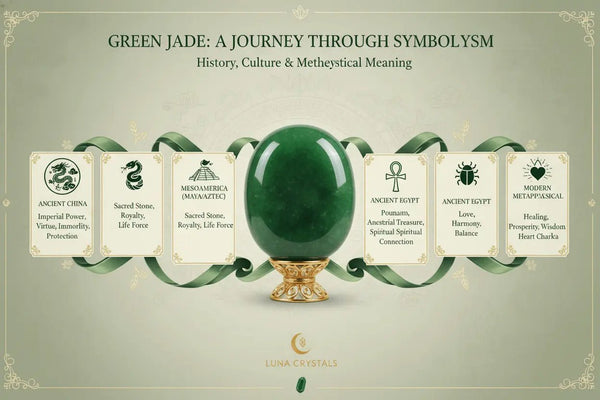
Deep dives on Jade — science, lore, and practical use.
More Jade in the Shop
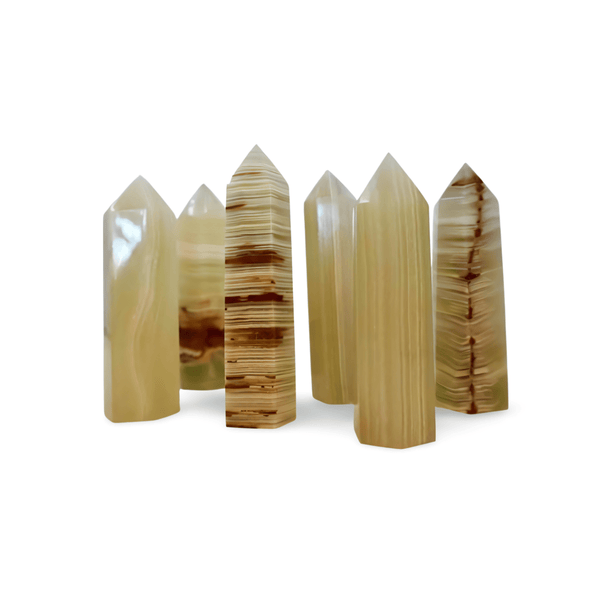
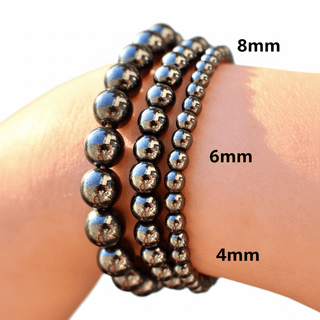
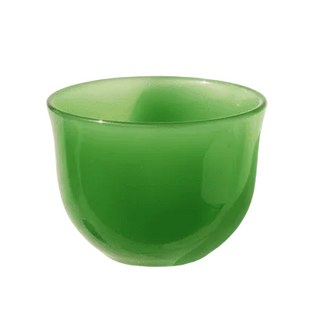
Other forms and sizes of this mineral — same stone, different expression.
Not sure which stone is yours? The Crystal Finder matches by intention, zodiac, and chakra.
✦ Take the Crystal Finder quizQuestions & Answers
Crystal Courtesan FAQ
Can I wear multiple crystals together, or will they cancel each other out? ▶
Crystals do not cancel each other out — this is a common myth. You can absolutely wear and combine multiple crystals. The key is intention. Some crystals are considered energetically complementary: amethyst + clear quartz amplify each other, rose quartz + moonstone support emotional healing, black tourmaline + shungite double up on protective energy. The only practical consideration is physical: harder crystals (like quartz) can scratch softer ones (like selenite) if stored together loosely. Store your crystals separately or wrapped in soft cloth.
How do I choose the right crystal for me? ▶
The most effective method is intuition — let yourself be drawn to a stone without overthinking it. Your subconscious often knows what you need before your conscious mind does. If you prefer a more structured approach, start with your intention: what do you want more of (protection, love, clarity, abundance, calm)? Then research which crystals are traditionally associated with that intention. The Crystal Courtesan glossary at Wax | Wane is designed exactly for this — each crystal entry includes its energetic properties, chakra associations, zodiac connections, and practical suggestions for use.
How do I cleanse and recharge my crystals? ▶
The most universally safe methods for cleansing crystals are: moonlight (place outside or on a windowsill during a full moon overnight), sound (use a singing bowl, tuning fork, or play 432Hz music near your crystals), and smoke (pass through sage, palo santo, or cedar smoke briefly). For recharging, sunlight works for most crystals but can fade color in amethyst, rose quartz, and fluorite — limit sun exposure to 1-2 hours maximum. Selenite and clear quartz are self-cleansing and can be used to cleanse other crystals by placing them nearby overnight. Avoid water for porous or soft stones (malachite, selenite, pyrite, hematite).
How do I know if my crystal is authentic or dyed/synthetic? ▶
Authentic crystals have natural inclusions, slight color variations, and imperfections — perfection is often a red flag. Dyed crystals often have unnaturally vivid, uniform color and may bleed color when wet. Synthetic crystals (like lab-created opalite or goldstone) are man-made glass and have no natural crystal structure — they are beautiful but energetically different. At Wax | Wane, we source authentic, natural crystals and disclose when a stone is lab-created or treated. When in doubt, ask us — we are happy to share sourcing details.
What crystal is best for beginners? ▶
Clear quartz is the classic beginner crystal — it amplifies intention, is easy to find in quality form, and works with any goal. For emotional support, rose quartz is the most accessible and universally loved. For protection and grounding, black tourmaline is practical and powerful. For intuition and sleep, amethyst is the most widely recommended. At Wax | Wane, we curate our crystal selection for quality and authenticity — every stone is selected with intention.
What crystals are best for sleep and relaxation? ▶
Amethyst is the most widely recommended crystal for sleep — it is associated with the crown and third eye chakras, promotes calm, and is traditionally placed under the pillow or on a bedside table. Moonstone supports emotional balance and is especially helpful during times of stress or hormonal fluctuation. Selenite is a high-vibration cleansing stone that many people place at the four corners of their bedroom to create a calm, clear energetic space. Lepidolite contains natural lithium and is one of the most calming stones in the mineral kingdom.
What is the difference between a crystal and a mineral? ▶
All crystals are minerals, but not all minerals are crystals. A mineral is any naturally occurring inorganic solid with a defined chemical composition. A crystal is a mineral that has formed with a repeating, ordered atomic structure — which gives it its characteristic geometric shape and optical properties. Some minerals (like obsidian) are technically volcanic glass and do not have a crystalline structure, but are still used in crystal healing practices. The Crystal Courtesan covers both crystals and minerals because both have unique energetic, scientific, and aesthetic properties worth exploring.
What is the metaphysical meaning of Shungite? ▶
Shungite is a carbon-based mineral found only in the Karelia region of Russia, estimated to be over 2 billion years old. It is one of the few natural materials known to contain fullerenes — hollow carbon molecules with powerful antioxidant properties. Metaphysically, shungite is considered one of the most powerful protective and grounding stones available. It is associated with the root chakra, EMF protection, water purification, and psychic shielding. At Wax | Wane, shungite is featured in both our Crystal Courtesan collection and our EMF protection line because of its dual scientific and energetic significance.

Curious about more crystals? Explore the full Crystal Courtesan glossary.
💎 Browse Crystal Courtesan →From The Crystal Blog
View all-

More Than Metal: The Fascinating Biology of Copper
Your grandmother wore a copper bracelet. So did the ancient Egyptians. Turns out, the real magic of copper isn't mystical — it's happening inside your cells right now.
More Than Metal: The Fascinating Biology of Copper
Your grandmother wore a copper bracelet. So did the ancient Egyptians. Turns out, the real magic of copper isn't mystical — it's happening inside your cells right now.
-

Why Jade Belongs in Every Collector's Cabinet
Jade has been revered across Chinese, Mesoamerican, and Maori civilizations for millennia — and for good reason. From imperial green jadeite to lavender rarities, discover the geology, cultural history, metaphysical...
Why Jade Belongs in Every Collector's Cabinet
Jade has been revered across Chinese, Mesoamerican, and Maori civilizations for millennia — and for good reason. From imperial green jadeite to lavender rarities, discover the geology, cultural history, metaphysical...
-

Why Tiger Eye Belongs in Every Collector's Cabinet
Tiger Eye is one of the most compelling stones a collector can own — combining a striking optical phenomenon called chatoyancy, a rich history as an ancient protective talisman, and...
Why Tiger Eye Belongs in Every Collector's Cabinet
Tiger Eye is one of the most compelling stones a collector can own — combining a striking optical phenomenon called chatoyancy, a rich history as an ancient protective talisman, and...


